Biomedical
Engineering
Accredited UNGGUL by LAM Teknik.
Program at a glance
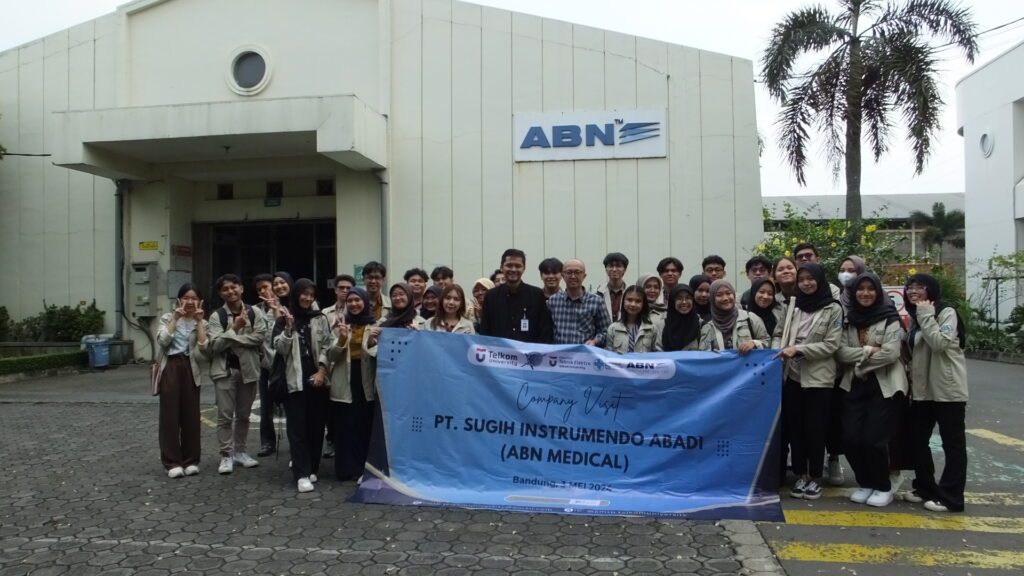
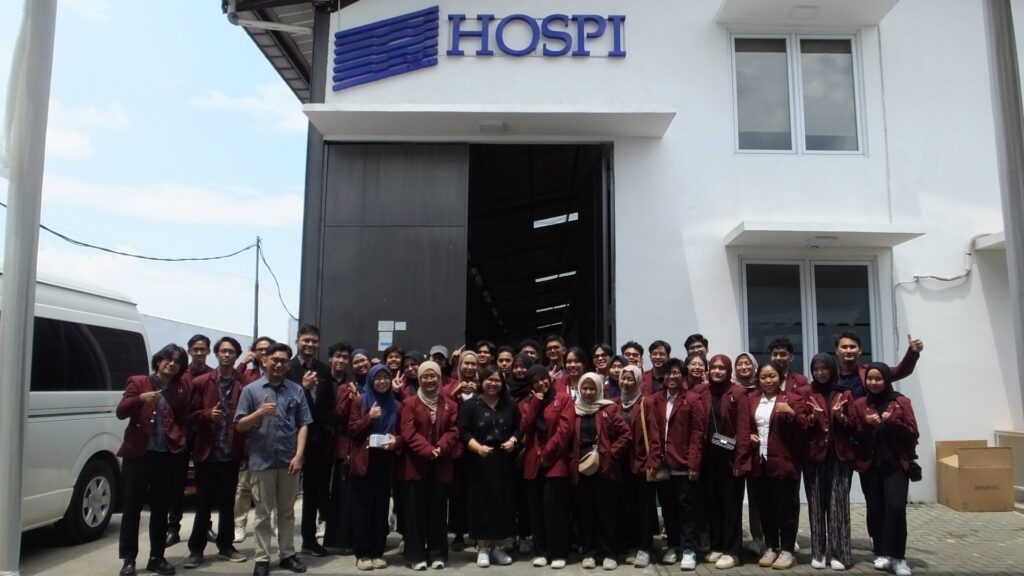
Activities, industry visits, and quality recognition.


What is Biomedical Engineering
The field of study, and what sets it apart at Telkom University.
A multidisciplinary field spanning engineering, biology, and medicine, to improve human quality of life.
Engineering principles are applied to health challenges and to innovation in patient care, integrating engineering, biological science, and clinical medical practice.
What sets this program apart is the ICT layer on top: artificial intelligence, robotics, and the Internet of Things. Graduates go beyond devices to the service systems that use them, working at the intersection of hospitals, the medical device industry, and software engineering.
Research is supported by thematic groups under the CoE Biomedical and Healthcare Technology.
What the curriculum holds to
- Benchmarked against global standards
- Project-based learning every year
- Capstone Design in the final year
- Working toward AUN-QA accreditation

Main specialization
Medical Instrumentation
Design, testing, and calibration of measurement and therapy devices, down to electrical safety. Most lab sessions take place in the program’s own laboratory.

Supporting fields
ICT for Health
Clinical information systems, electronic medical records, and online health services that connect patients with medical staff.

Supporting fields
AI, Robotics, and IoT
Machine learning for diagnosis, rehabilitation robotics, and connected devices for remote patient monitoring.
Graduate profile
Ten career paths the curriculum prepares for.
| No | Career path | Scope |
|---|---|---|
| 01 | Medical Device Engineer | Design and development of health devices |
| 02 | Medical Product Quality and Testing Expert | Testing and quality assurance of medical products |
| 03 | Biomedical Researcher | Biomedical science and engineering research |
| 04 | Medical Technician | Maintenance and calibration of health devices |
| 05 | Health Technology Consultant | Technology consulting for health facilities |
| 06 | Health Application Developer | Software for health services |
| 07 | Biomedical Engineer | Biomedical systems engineering in hospitals and industry |
| 08 | Biomaterials Developer | Biomaterials development for implants and therapy |
| 09 | Manufacturing Engineer | Industrial-scale production of health devices |
| 10 | Medical Technology Developer | Development of new medical technology |
Placement is supported by MoUs with hospitals, the medical device industry, educational institutions, and government, plus structured internships and an alumni network.
See admissionsVision, mission, and goals
The direction of the study program, and the seven goals that measure it.
To be an internationally reputable undergraduate program that excels in education, research, innovation, and entrepreneurship in Biomedical Engineering, and contributes to the Sustainable Development Goals.
Prepare graduates who excel in biomedical technology by creating a learning environment that encourages intellectual growth.
Contribute to the advancement of biomedical science and technology to drive innovation in ICT-based health support devices.
Build strong partnerships with stakeholders in education, research, and community service.
Seven program goals
- Produce graduates who excel in biomedical science and engineering at the national level.
- Increase stakeholder trust at the national level.
- Produce research outputs in biomedical science and engineering.
- Improve public understanding of how biomedical technology is used.
- Produce innovative products that improve public quality of life.
- Apply quality management based on ISO and SN-DIKTI.
- Realize tridharma cooperation with health institutions, education, government, and industry.
Five strategic pillars
How the study program carries out its mission, from curriculum to governance.
S.01
Academic excellence
An adaptive competency-based curriculum, global benchmarking, project-based learning, working toward AUN-QA.
S.02
Research and innovation
Thematic research groups, Scopus and WoS indexed publications, access to competitive grants.
S.03
Entrepreneurship
Incubation, startup development, and IP and patent protection within the academic ecosystem.
S.04
Strategic partnerships
MoUs with hospitals and the medical device industry, structured internships, an alumni network.
S.05
Quality governance
SPMI, ISO standards, and periodic curriculum evaluation based on tracer study data.
Research and achievements
Activities of lecturers and students under the CoE Biomedical and Healthcare Technology.
2025, RISKESTREN funding
Dechargo-set, from an analysis of cross-legged sitting posture
Luh Ade Keisha Mayuri Winarta and Nabila Lathifia Hasna passed selection for the Pesantren Health Research Program (SAPIN), supervised by dr. Fenty Alia, M.Kes. and Thalita Asmaria, M.Sc. of BRIN.
8 January 2026, Community service
HospiClaim: BPJS claim e-billing at RS Murni Teguh Naripan
Nur Ibrahim, Salsabila Aurellia, and Annisa Humairani supported the use of a web-based application for efficient and accurate claims administration.
27 May 2026, Community service
Microgreen cultivation training in RW 08
Using limited space at home: the concept, benefits, and basic cultivation techniques were delivered directly to the target residents.
6 to 11 October 2025
Student achievement
Muhammad Abidzar Akrom at the International Conference Santri Mendunia
Raised the issue of digital literacy among santri at Pesantren Tahfidz Maskanul Huffadz as a means of educational innovation and digital outreach, presented in Malaysia, Singapore, and Thailand.
2025
Pendanaan Ayo Beraksi
Aksi Air Bersih: IoT for clean water handling for street vendors
Dita Puspitasari, Fathur Rahman, and Liana Nafisa Saftari, together with Nasya Vania Putri, Asti Mutiara Azzahra, and Muhammad Rizkyandito, in the Desa Citeureup area, funded by Telkom Indonesia.
Admissions
Academic year 2026/2027. Selection opens in several waves throughout the year.
Who can apply
Graduates of senior high school (SMA/MA) science tracks, and vocational school (SMK) engineering graduates.
Selection paths
The general path and the Entrance Selection Exam (USM), managed by Telkom University SMB.
When it opens
Several selection waves across the current academic year.
Available during your studies
Scholarships, MBKM, internships and practical work, and a Capstone Design in the final year.
Join an UNGGUL-accredited program
Program consultation is available directly with the program coordinator.
Apply Now- [email protected]
- Phone
- +628 111 02 585
- Address
- TULT Floor 19, Bandung 40257

