Digitalizing BPJS Claims Administration with the BPJS-HospiClaim e-Billing Application
Digitalizing BPJS Claims Administration with the BPJS-HospiClaim e-Billing Application
News
Activities and updates from the study program.
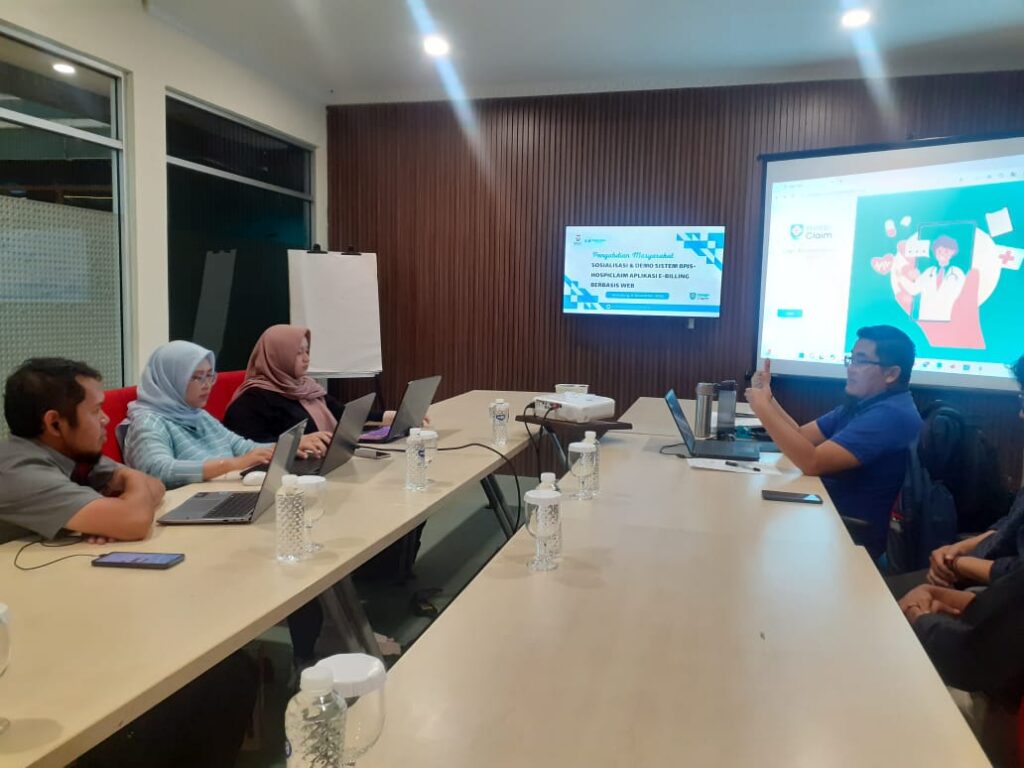
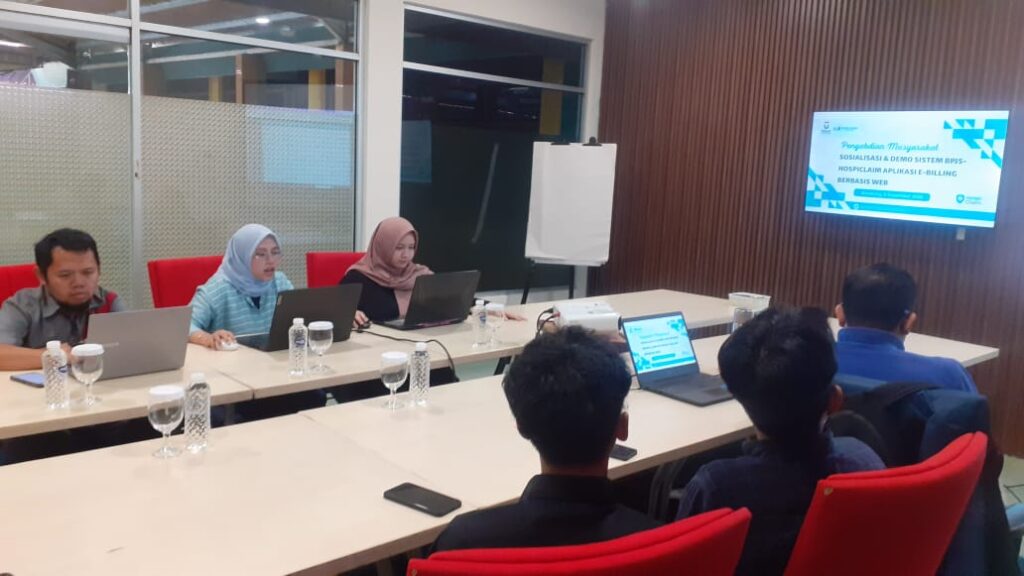
Bandung – Thursday, 8 January 2026. To support digital transformation in the health sector, a lecturer team of Nur Ibrahim, Salsabila Aurellia and Annisa Humairani carried out a Community Service activity: socialization and mentoring on using the BPJS-HospiClaim e-Billing application at RS Murni Teguh Naripan Bandung. The activity focused on improving the efficiency and accuracy of BPJS claims administration, which is still largely done manually. It involved the hospital administrative staff who directly handle the input, management and recapitulation of BPJS claim data. Participants took part actively and enthusiastically, especially in the hands-on session with the web-based system.
The activity began with an opening and a short explanation of its background, including the common challenges in BPJS claims administration. BPJS-HospiClaim (www.hospiclaim.com) was then introduced as a web-based e-Billing solution designed to help administrative staff work in a more structured and efficient way.
This was followed by a demonstration of BPJS-HospiClaim. Participants were walked through the application workflow, from logging in and managing user data, to entering patient and medical procedure data, and automatically generating billing and claim reports. In this session, participants could see the difference between the manual workflow and the system-based workflow first-hand.
In the discussion session, participants raised questions and suggestions, such as how to correct data to avoid duplication, adjusting report formats for internal audit needs, and the potential to integrate the system with other platforms in the hospital. The team responded with operational explanations and demonstrated the relevant features.
Based on the results, participants felt that BPJS-HospiClaim can speed up administrative work, reduce the risk of calculation errors, and make BPJS claim recapitulation and reporting easier. The activity also helped improve the digital literacy readiness of administrative staff in using web-based information systems for their daily work.
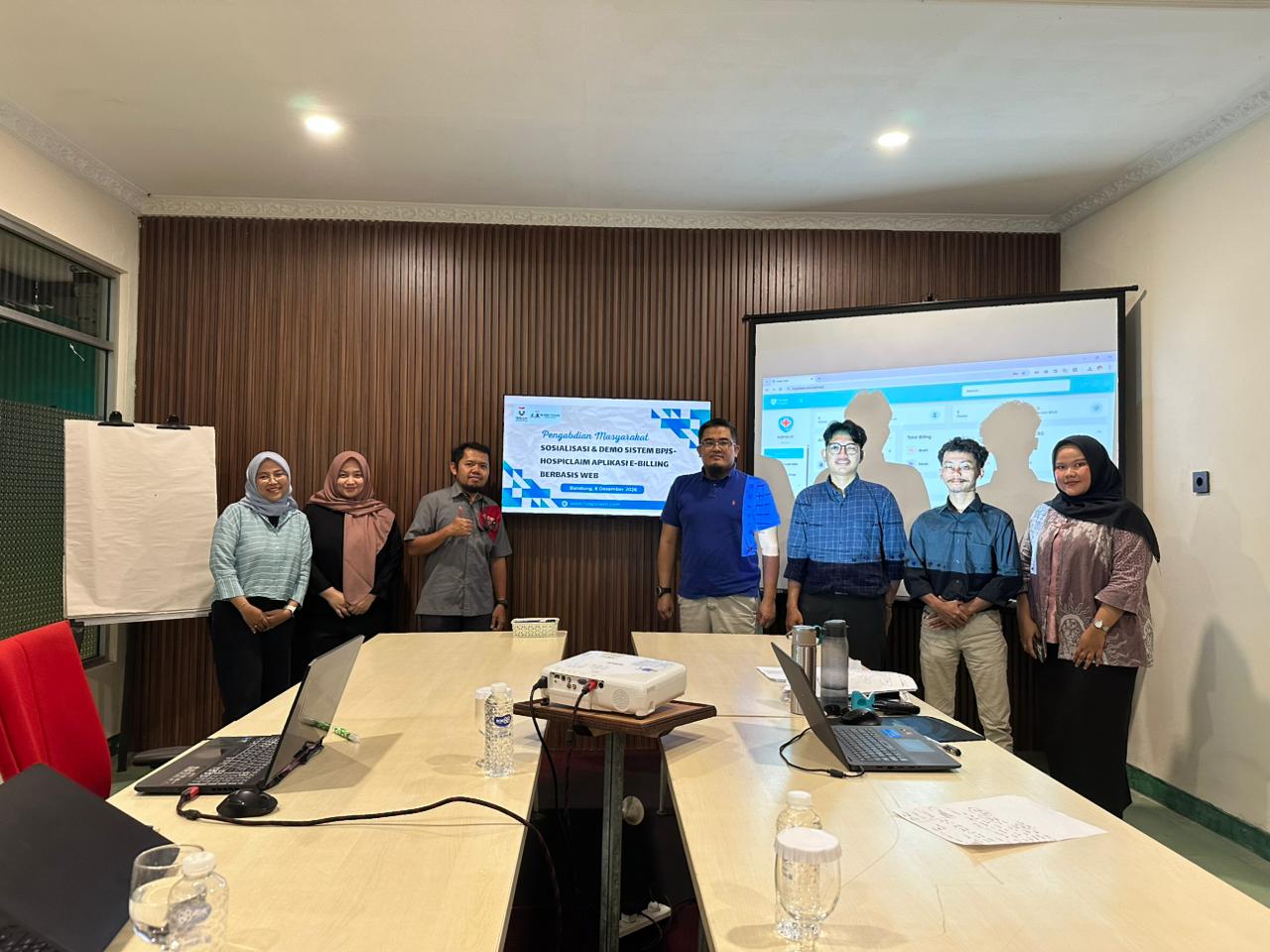
The activity closed with participant feedback forms, a short discussion of follow-up plans, and a group photo. The hospital welcomed the adoption of BPJS-HospiClaim and hopes the system will keep being developed and used sustainably to support the digitalization of BPJS claims administration.
Through this Community Service activity, the team hopes BPJS-HospiClaim will be a first step toward BPJS claims administration that is more efficient, accurate and adaptive to technological developments in healthcare services.